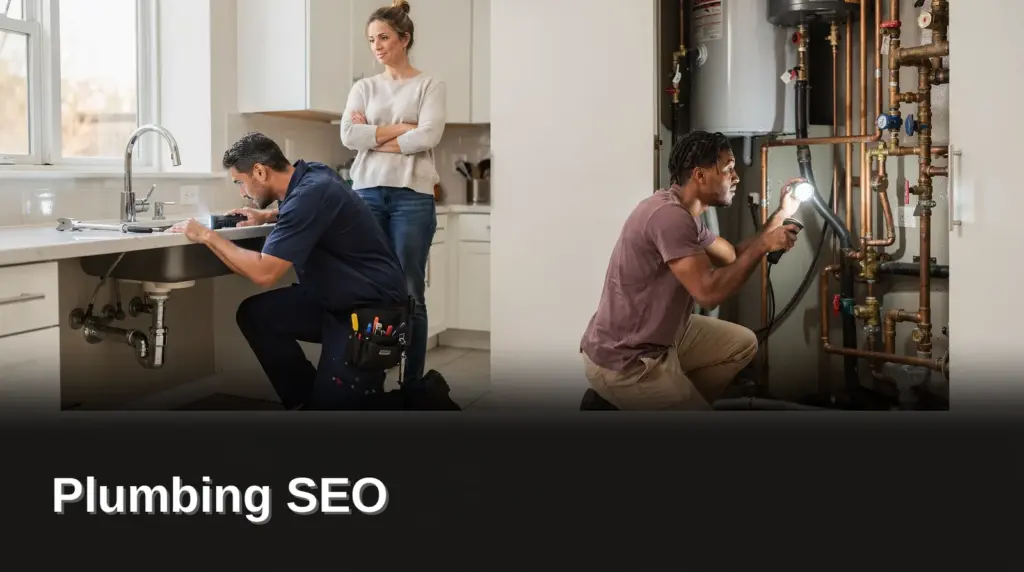
Plumber SEO wins emergency searches through a fully optimized Google Business Profile with accurate hours, current photos, and a steady flow of reviews. Profile maintenance is essential for capturing burst-pipe calls and planned repipe projects alike.
Key Takeaways
- Emergency searches require a fully optimized Google Business Profile with accurate hours, current photos, and steady reviews.
- Planned searches convert through detailed service pages that answer specific customer questions about costs, timelines, and options.
- Google’s map pack prioritizes businesses closest to the searcher with complete, active profiles for emergency calls.
- Winning a service area demands one page per service and per town to capture searches across every ZIP code.
Two kinds of plumbing searches
Plumbing searches fall into two distinct categories. Each demands a different strategy to capture the call.
Emergency searches happen when a pipe bursts or a drain backs up. These buyers do not shop around. They pick fast. Plumbing SEO wins these moments through the map pack and Local Services Ads, where visibility at 2 a.m. determines who gets the job. Most call one of the first names they see.
Planned searches follow a different rhythm. A homeowner researching a water heater replacement or a whole-house repipe compares options, reads reviews, and evaluates pricing. SEO for plumbers captures these buyers through detailed service pages and a strong review profile. The path to the call runs through content that educates and reassures.
How do emergency plumbing searches differ from planned ones?
Emergency searches trigger immediate action. The homeowner needs a fix now and selects the first credible option. Planned searches involve research. The buyer reads multiple pages, checks reviews, and may request quotes from several companies before deciding.
What ranking factors matter most for each search type?
For emergency searches, proximity and plumbing Google Business Profile optimization carry the most weight. Google’s map pack prioritizes businesses closest to the searcher with complete, active profiles. For planned searches, plumbing local SEO factors like service page depth, review volume, and website authority determine which companies appear. A well-optimized site with dedicated pages for each service and location outperforms competitors who rely on a single homepage.

Your Google Business Profile comes first
A plumbing Google Business Profile determines whether a plumbing company appears in the map pack when a pipe bursts at midnight. The primary category must be set to Plumber, with real secondary categories reflecting actual services offered. My Google Business Profile guide walks through every field that affects local visibility.
What fields matter most for a plumbing Google Business Profile?
Every service the company offers needs to be listed explicitly. Hours must stay current, especially emergency hours. Photos require regular updates to show real work and real trucks. A profile set up once and left alone slowly loses ground to competitors who keep theirs active.
How do reviews affect plumbing local SEO rankings?
A steady flow of reviews maintains profile strength over time. Reviews signal relevance and recency to Google’s local algorithm. Without consistent new reviews, the profile fades even if nothing else changes. Competitors earning fresh reviews weekly will overtake a stagnant listing within months.
Service pages that answer real questions
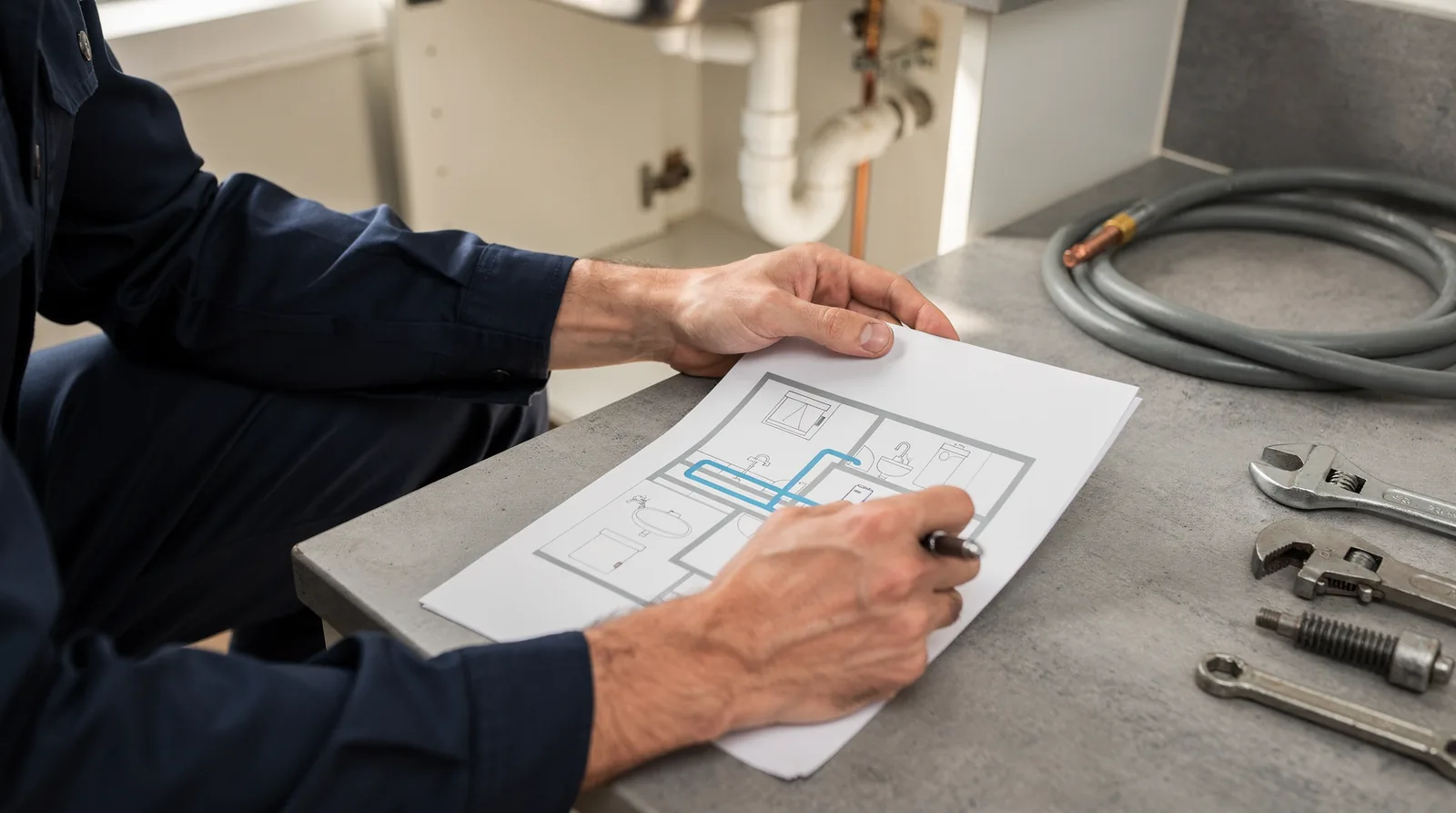
Service pages earn rankings when they address the specific questions plumbing customers ask before picking up the phone. Signs of a failing water heater, the cost factors behind a repipe, and how long a sewer line replacement takes are the details that separate a page that converts from one that gets ignored. Generic descriptions of services do not hold attention. Pages built around real customer intent do.
SEO for plumbers works best with one page per service and a genuinely local page for each town you want to win. Each page must answer the questions that drive emergency and planned searches. Common topics include tank versus tankless water heater comparisons, warranty coverage, and local permit requirements. Plumber SEO captures more high-intent calls when mobile pages load fast and the content matches what nearby customers type into search.
What should a plumber’s water heater page include?
A water heater service page needs details on tank and tankless options, typical replacement timelines, and cost ranges by unit type. Warranties, energy efficiency ratings, and local permit rules also belong on the page. These specifics match the questions homeowners ask after a cold shower or a leaking tank.
Why do question-based service pages outperform generic ones?
Question-based pages match search intent more precisely than broad service descriptions. Google’s local algorithm measures relevance partly by how well website content aligns with what users search for. A plumbing Google Business Profile listing also draws from this content to determine relevance. Pages that answer real questions strengthen both organic rankings and map pack visibility for plumbing local seo.
Service pages built this way feed directly into a broader contractor SEO strategy that captures high-intent jobs across home services categories.
Win the whole service area
Winning a service area requires more than a single Google Business Profile. Plumbing companies must build one page per service and town to capture searches across every ZIP code they serve. Without this structure, competitors with dedicated local pages claim the map pack for high-intent queries.
Plumbing local seo succeeds when a company proves relevance in each community it targets. A generic “service area” radius does not accomplish this. Google rewards businesses that demonstrate genuine local presence through content, citations, and customer signals tied to specific towns.
How do plumbers identify which towns to target first?
Geo-grid scans reveal where a plumbing company already ranks and where gaps exist. These scans track rankings by ZIP code, showing exactly which towns deliver visibility and which ones competitors own. Plumbing business owners use this data to prioritize the highest-opportunity locations rather than guessing where to invest.
What makes a town-specific page rank for plumbing searches?
A genuinely local page includes more than a swapped city name. Effective location pages for service businesses incorporate unique project details, neighborhood references, and locally relevant service descriptions. Plumber seo depends on these signals to differentiate one town page from another and avoid thin-content penalties.
Reviews from customers in each town strengthen local relevance further. A plumbing company that collects and responds to reviews from specific communities builds the trust signals Google uses to rank businesses in those areas. Replying to every review shows customers and Google that the business is active.
Reviews: the deciding factor
Reviews sit at the center of Google’s local ranking algorithm. A plumbing company without a steady review flow loses map pack visibility to competitors who collect feedback consistently. The plumbing Google Business Profile checklist confirms reviews rank alongside accurate categories, complete service listings, and current hours as core ranking inputs.
How should a plumbing company ask for reviews?
Technicians hold the highest-converting moment for review requests. The request happens immediately after service completion, when the customer’s relief is strongest.
- The technician asks the customer directly for a review before leaving the job site.
- The technician sends a text link to the review form while standing with the customer.
- The customer submits the review within minutes, while the experience is fresh.
What should a plumbing review mention?
Generic praise helps less than specific detail. Reviews that name the technician, describe the problem solved, and include the town signal relevance to Google’s local algorithm. A review stating “Mike cleared a blocked sewer line in Arlington” carries more ranking weight than “great service.” Plumbing owners who build a repeatable review generation system capture this specificity at scale.
Citations and consistency
Citations are the mentions of a plumbing company’s name, address, and phone number across directories and websites. Google’s local algorithm weighs three factors: relevance, distance, and prominence. Consistent citations strengthen prominence, which directly influences map pack placement.
Plumbing local seo depends on citation accuracy. A plumbing company’s name, address, and phone number must match exactly across every directory. One mismatched suite number or abbreviated street name weakens the signal Google uses to verify the business.
Why do duplicate listings hurt plumbing rankings?
Duplicate listings appear after moves, rebrands, or address changes. Google sees conflicting information and loses confidence in which listing is authoritative. The result is lower prominence and fewer map pack appearances.
Follow these steps to build citation consistency:
- Audit every existing listing for the plumbing company across major directories.
- Correct name, address, and phone number to match the plumbing google business profile exactly.
- Remove or merge duplicate listings created by previous moves or rebrands.
- Submit consistent citations to data aggregators and local directories.
- Recheck listings quarterly for accuracy.
A structured approach to local citation building prevents the drift that erodes rankings over time.
How do citations build trust with Google?
Google cross-references directory data to validate a business. When every source agrees, the algorithm treats the plumbing company as established and trustworthy. Inconsistent citations create doubt, and doubt costs visibility.
Local Services Ads alongside SEO
Local Services Ads (LSAs) sit above the map pack for emergency plumbing searches. Emergency buyers do not shop around. They pick fast. A plumbing company that combines LSAs with plumbing SEO captures high-intent calls while organic rankings build momentum over months.
How do LSAs and organic SEO work together for plumbers?
LSAs deliver immediate visibility for urgent searches like “burst pipe repair.” SEO for plumbers builds lasting organic presence for non-emergency terms. Together, the two channels prevent revenue gaps. A company relying solely on paid ads loses visibility the moment the budget pauses. Organic rankings compound over time and continue producing calls without incremental spend.
What makes LSAs trustworthy for plumbing customers?
Google screens plumbers through LSA verification before displaying the ads. This verification adds a trust layer that standard paid search lacks. A verified badge signals legitimacy to homeowners facing water damage or gas leaks. The plumbing Google Business Profile reinforces that trust when the same company also appears in the map pack below the LSAs. Consistent branding across both placements shortens the decision window for distressed callers.
Plumber SEO and plumbing local seo efforts strengthen the organic foundation beneath the paid placement. A well-optimized profile with current hours, service categories, and recent reviews supports both channels simultaneously. The map pack listing draws clicks from shoppers comparing options. The LSA captures the emergency caller who needs help now. Neither channel replaces the other. Both feed a predictable pipeline when managed as complementary investments rather than competing budgets.
A website that turns visits into calls
A plumbing website must convert mobile visitors into phone calls within seconds. Fast mobile pages paired with clear calls to action capture high-intent calls instead of losing them to directory sites.
How fast should a plumbing service page load?
Service pages need to load in under three seconds on mobile. Plumbing SEO works when profile optimization, city and service pages, reviews and fast mobile pages all work together. Slow pages push potential customers toward competitors who appear in the same search results.
What elements reduce friction for mobile callers?
Click-to-call buttons and prominent phone numbers eliminate the steps between search and contact. Count calls, not clicks, when you measure plumbing SEO. A website built for conversion places the phone number at the top of every page and uses tap-to-call functionality that works across all devices.
The combination of speed and frictionless contact paths determines whether a plumbing Google business profile listing translates into revenue. Owners who neglect mobile page speed forfeit emergency calls to faster-loading competitors.
Track booked jobs, not just rankings
Rankings alone do not pay invoices. Plumbing company owners need to measure what actually drives revenue. Effective plumber SEO is measured in calls and booked jobs, not keyword positions. A first-page ranking means nothing if the phone stays silent.
What metrics matter more than keyword rankings?
Call volume and booked job counts reveal whether SEO for plumbers generates real business. A plumbing company that ranks well but converts poorly loses the return on its marketing investment.
How should a plumbing company track calls from SEO?
- Assign unique call tracking numbers to the website and the plumbing Google Business Profile.
- Route those numbers to the main business line so every inbound lead is captured.
- Log each call’s outcome: booked job, voicemail, wrong number, or price shopper.
- Review the ratio of booked jobs to total calls every week.
I build marketing around the metrics a buyer underwrites. Pipeline predictability matters more than impression counts. A plumbing company preparing for exit needs documented lead flow that converts into booked revenue, not vanity rankings. Without call tracking, the owner cannot prove the marketing function transfers to a new operator. That gap erodes enterprise value during due diligence.
FAQ
How long does SEO for plumbers take to show results?
Profile and website fixes can show early movement within weeks. Ranking across a full service area typically takes several months. The timeline depends on market competition, existing website authority, and how aggressively the plumbing Google Business Profile is optimized. Owners who commit to consistent review generation and service-page publishing see faster traction than those treating SEO as a one-time fix.
What does plumber SEO cost?
Plumber seo pricing varies by scope and market. My local SEO engagements start at $1,500 a month. The exact investment depends on the number of service areas, how competitive the market is and the current state of the profile. Plumbing companies investing at this level receive ongoing optimization, content development, and performance reporting rather than a set-and-forget setup.
Which tactic delivers the highest return first?
Google Business Profile optimization delivers the highest return as the initial step. The profile appears in Google Maps and the map pack when nearby customers search for plumbing services. A fully completed profile with accurate categories, current hours, service listings, and fresh photos captures high-intent calls that competitors with neglected profiles lose. This single asset often generates more qualified leads than any other early-stage tactic.
Conclusion
Plumbers who win both emergency and project searches treat SEO as a system, not a tactic. The path is clear: optimize the Google Business Profile, pair it with Local Services Ads, build fast mobile pages, and track booked jobs through call recording. Owners who execute these steps create a documented pipeline that produces revenue today and proves transferable value tomorrow. The next move is auditing the current profile and call-tracking setup.
For the full approach, see plumbing marketing and Local Services Ads and local SEO. To see where you rank across your service area, start with the free geo-grid audit.
About the author
Justin Smith is the founder of Ronin Communications, a fractional CMO practice for owner-led businesses. He spent more than 20 years writing and leading strategic communications for the federal government and holds an M.A. in Strategic Communications from American University.